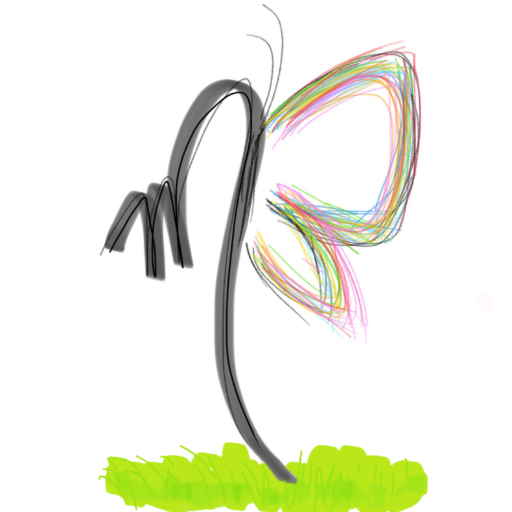
The
Untangler.
The name did not come from a strategy. It come from the work itself: from how I see it and from what I keep finding to be true.
The idea of untangling is not new. Therapists and coaches have used the metaphor for years, and for good reason: it describes something real about how this kind of work moves. What I am not doing is reinventing the wheel.
What I am doing is naming, as precisely as I can, the image that most accurately reflects how I experience this work from the inside. Not as a brand. Not as a method. But as a picture of what actually happens, the careful, patient work of finding where things became knotted, and beginning to loosen.
Most of my clients arrive with a presenting issue, something urgent, overwhelming. But what keeps them stuck is rarely the whole story. It is often just the most visible part of something older, more layered, and more deeply rooted.
So we don't rush to fix it.
Instead, we begin by paying attention.
Not the kind of attention that tries to interpret or solve too quickly, but a slower, more precise kind. The kind that allows us to trace things back, to notice where they began to tighten, where they became knotted, and what has been holding them in place.
This is what I mean by untangling.
It is not an intervention. It is a process of orientation, of finding our way through complexity without forcing it to simplify.
Together, we ask:
Where did this begin?
What is this holding in place?
What has it made possible for you, even if it is now causing difficulty?
Many of the people who find their way here hold a great deal: they feel things deeply, think across multiple registers, and resist easy answers. I don't ask them to reduce that. We work with it.
Our curiosity is part of the process. Not as something restless or scattered, but as something focused and sustaining, something that helps us stay with what is not immediately clear.
And as we do that, something begins to shift.
Not suddenly, not dramatically but perceptibly.
Things start to loosen.
And in that loosening, clarity emerges. Not a simplified version of your experience, but a clearer view of its structure, how things are connected, where the tension sits, where there is space.
From there, what was fixed begins to feel more open. Not because anything has been imposed, but because there is finally enough room to see it differently and, from that, to choose.
This work takes time.
Because we are not dealing with surface-level problems, but with something more like an internal architecture, something that has been built, often without you realising, over time.
My role is to help you understand that structure well enough that change becomes possible without everything collapsing.
The Untangler is both my practice and my way of working. It reflects how I think, how I listen, and how I stay with you in the process: with rigour, with precision, and without rushing to conclusions.
I trust that, given the right kind of attention, even the most complex knots can begin to loosen.
Not by force.
But by understanding.
BEGIN HERE
The first conversation is free, and without obligation.
Tell me a little about where you are and what you are looking for. There are no right answers.