psychotherapeutic counsellor & coach
What happens between people,
and what happens within you
Couples, mothers and daughters, parents, and individual work.
Usually when the same thing keeps happening and you cannot shift it on your own.
Whatever brought you here, we begin by paying attention
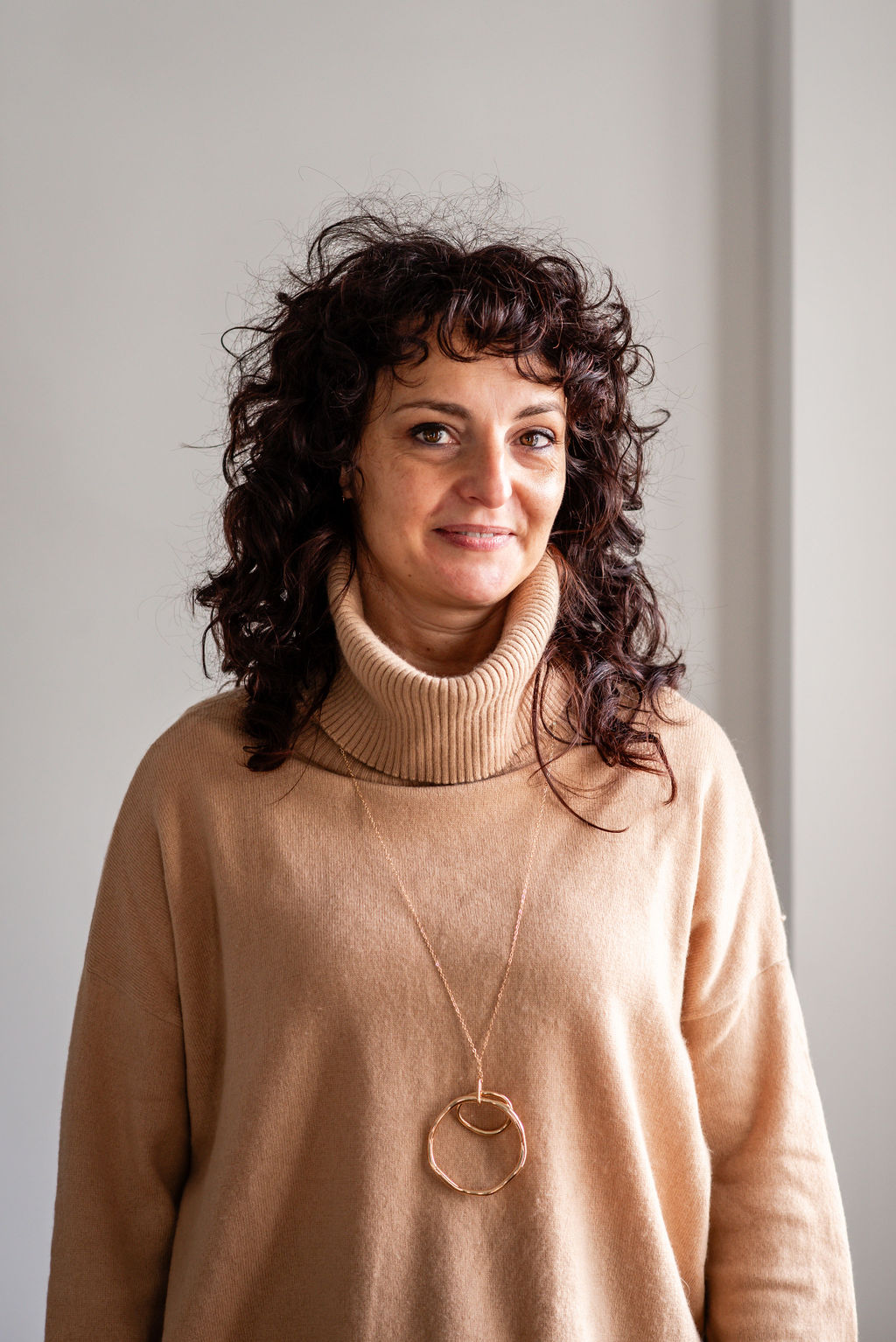
I am Maura Brivio, a psychotherapeutic counsellor and coach based in Bath, working online worldwide in English and Italian. I work with individuals and with relationships, at the place where the practical questions and the deeper ones meet. Where the work needs depth, we go deep. Where it needs movement, we find it. Often both, in the same conversation.
What brings people here
A change in the relationship
Some relationships do not break. They lose the form that used to hold them. The closeness that worked when a daughter was small, or when a couple was still building something, does not simply carry forward into what comes next, and the version of it fitted to who both people are now has often never had the chance to form. What is left is a careful distance that neither person chose and both can feel. Conversations stay on the surface, not from indifference but from not knowing where else to put what sits underneath.
A beginning you did not choose
Some people hold an origin they did not choose and cannot fully account for. For adults who were adopted this is often a settled fact and an open question at the same time: a history with gaps in it, loyalties that pull in more than one direction, a sense of belonging that does not resolve simply because the life built since is a good one. It is not a wound to be located and treated. It is a set of early conditions that shaped how attachment, trust and identity were learned, and those conditions do not stop operating because they have been named.
Parenting challenges
Most people raising children are doing it with a clear sense of what they do not want to repeat, and find themselves repeating some of it anyway, usually in the moments with least room to think. The intention is genuine and the reaction is older than the intention. It is not a failure of effort or of love. What was learned early about anger, closeness, need and repair was learned before there was any choice in it, and it runs fastest under pressure. There is also the question of what is being handed on deliberately: which language the difficult conversations happen in, which version of childhood is being built, and whose.
Living alongside illness and loss
Serious illness and bereavement do not stay in the place set aside for them. A diagnosis, yours or someone else's, quietly reorganises a whole family: who holds what, who is being protected from what, what is said at the table and what is carefully not. Grief does the same, and rarely in the sequence people expect. There is often a long stretch of functioning very well, which is its own difficulty, because from the outside it looks like the thing has been dealt with. Where a parent is ill, children carry a version of it that adults seldom see, and usually work hard to shield the adults from what they have already understood.
The relationship with yourself
It is the one relationship that cannot be left, and often the one conducted most harshly. A running commentary that would never be directed at someone loved, and has somehow become the ordinary internal weather. It is rarely arbitrary. Self-criticism usually began as something useful: a way of staying safe, of getting things right, of arriving there before anyone else could. That it once worked is exactly why it holds. And it sets the terms for every other relationship, because it decides in advance what a person believes they are allowed to want, to feel and to ask for.
What gets carried into work
Work is where a great deal of relational life happens without ever being named as such. The colleague who can undo a competent person in one sentence. The promotion held for two years that still feels borrowed. The habit of picking up what others put down, until the exhaustion is real and the moment of agreeing to any of it cannot be found. The decision to leave that has been under review so long it is no longer clear whether it is the job or something that would travel with it. These are not career problems with career solutions. They are the same threads, showing up where the stakes are public.
None of these issues exist in isolation. Your relationship to your mother, your career transition, your anxiety in conflict, they are not a list. They are a web. Pull one thread and something else tightens. Try to cut through it and you end up more stuck.
The work requires seeing the whole system, finding the right starting point, and working with patience and precision. Not force. Not speed. Just careful, sustained attention to what is actually wound together and what happens when you begin, gently, to separate one strand from another.
This is slow work, but it can begin to create change from the very first session. And sometimes shifts are immediate. More often, change unfolds over time. But when something finally loosens, when you find yourself responding differently without trying, when the old pattern simply does not pull as tight, you will feel it. And then we keep going.
What the work has made possible
“ You listened as I broke apart in pieces, holding sanity patiently in your hands for me to return to. You companioned me through my most difficult hours and many times helped me laugh, or find a thread of rightness inside the chaos.”
— Adult, she/her
“ When we first came, we were feeling lost and unsure of the path forward. What we valued most was the freedom to explore what was right for us, without pressure or expectation. In the end, although we’ve decided to separate, we’ve done so with clarity and kindness. That is very much thanks to the work we did here.”
— ‘Former’ Couple
" At 79, I honestly thought: what’s the point? I’m too old for this kind of thing. But as the weeks went on, something shifted. The way Maura guided us helped me listen differently. She was honest without ever making me feel judged. The work wasn’t about fixing the past but understanding it. And that made all the difference. I didn’t expect much from this. I’m so glad I gave it a chance.”
— Mother, 79, she/her
The first conversation is free, and without obligation.
Tell me a little about where you are and what you are looking for. There are no right answers.